
The Aboriginal Peoples of Australia – Guardians of One of the World’s Oldest Living Cultures
Introduction
Aboriginal and Torres Strait Islander peoples are the First Peoples of the Australian continent, with origins stretching back at least 50,000 years, and archaeological research suggesting up to 65,000 years or more. Long before European settlement, they lived across deserts, coastlines, grasslands, alpine country, and tropical rainforests shaping one of the world’s oldest continuously living cultures.
Their knowledge, languages, and spirituality have been passed down through countless generations, forming a deep and enduring bond between people, land, and the universe. This article celebrates their cultural roots, traditional ways of life, the impact of colonization, and the ongoing strength of Aboriginal identity. Despite centuries of disruption, First Peoples continue to teach the world about resilience, belonging, and community.
Ancient Origins and Connection to Country
Archaeological evidence at sites such as Lake Mungo and Kakadu National Park shows Aboriginal presence tens of thousands of years ago. For Aboriginal peoples, the land is not just physical territory it is Country, a living presence that holds stories, ancestors, and responsibilities. Country connects people to the spirits of place, and to everything that breathes, grows, and moves.
At the heart of Aboriginal spirituality lies the Dreaming (or Dreamtime). Though the term is widely used, Aboriginal nations have diverse names and understandings for this sacred worldview. The Dreaming explains creation, moral law, and the continuity of life connecting past, present, and future in one flowing reality.
“Country is not just where we stand it is who we are.”
Traditional Life, Knowledge, and Culture
Before European arrival, there were over an estimated 250 language groups and hundreds of dialects across the continent. Each community developed ways of life shaped by its environment, from desert hunters to coastal fishers and rainforest gatherers.
A key example of traditional environmental care was fire-stick farming (cultural burning). In many regions, this practice encouraged new growth, supported biodiversity, and reduced destructive wildfires an approach now being revived through modern ecological programs.
Aboriginal knowledge extended into astronomy and seasonal calendars, guided by observations that varied across different nations and landscapes. The stars guided travel and ceremony, while patterns in plants and animals revealed the rhythm of the seasons.
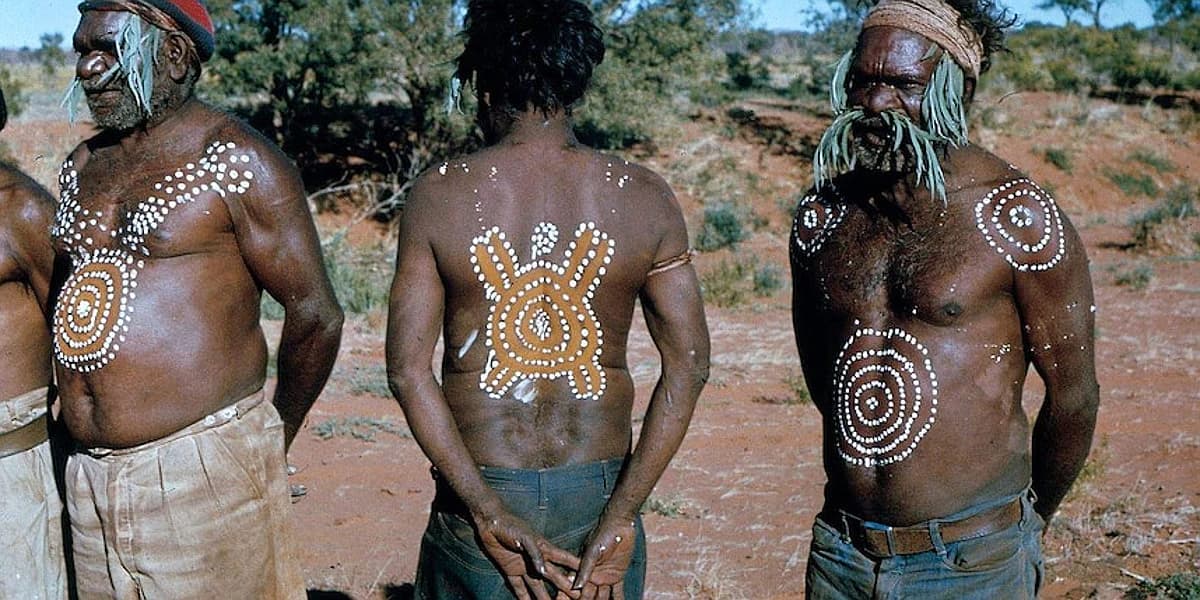
Art, music, and dance are powerful expressions of identity. Aboriginal art is more than decoration it is a visual language of history, law, and spirituality. From rock carvings and bark paintings to modern dot art, each symbol carries ancestral meaning.
Music, from the rhythmic beat of clapsticks to the deep resonance of the didgeridoo, protects oral history and strengthens community. Dance brings these stories to life, embodying the Dreaming in motion.
“Art, song, and dance are not relics of the past they are living traditions that carry wisdom forward.”
Impact of European Colonization
The arrival of the British in 1788 marked a devastating chapter. The land was claimed as terra nullius (“land belonging to no one”), denying the existence of thriving nations who had cared for Country for millennia. Dispossession, frontier violence, disease, and forced relocation led to catastrophic loss of life and culture.
In the 19th and 20th centuries, government policies sought to control or erase Aboriginal identity. The most painful legacy remains the Stolen Generations, when Aboriginal children were taken from their families under assimilation policies. The trauma of separation and cultural loss continues to affect communities today.
Yet, amidst this suffering, resilience endured. Elders kept languages alive, ceremonies continued in secret, and culture survived — sustained by strength, knowledge, and love for Country.
Struggle for Rights and Recognition
From the mid-20th century, Aboriginal Australians began organizing national movements for justice, equality, and self-determination. The 1967 Referendum became a turning point, when over 90% of Australians voted to allow the federal government to make laws for Aboriginal peoples and to include them in the national Census.
In 1992, the Mabo Decision overturned terra nullius, acknowledging that Indigenous land ownership existed before colonization. This led to the Native Title Act, restoring some land rights and cultural recognition.
More recently, the 2017 Uluru Statement from the Heart called for a constitutionally enshrined First Nations Voice to Parliament, as well as Treaty and Truth-telling a united pathway toward justice and healing. While debates continue, the Statement represents visionary leadership from Aboriginal communities themselves.
Modern Aboriginal Australia
Today, Aboriginal Australians continue to reclaim, revive, and celebrate their cultures. Community-led education, language reclamation, cultural tourism, and land care programs reconnect young people with ancestral knowledge.
Aboriginal creativity flourishes worldwide. Artists like Emily Kame Kngwarreye and Rover Thomas bring ancient stories into global galleries. Musicians such as Archie Roach, Jessica Mauboy, and Baker Boy use song to honor ancestors and express modern pride. Sporting icons like Cathy Freeman and Adam Goodes spark conversations about race, identity, and respect.
There is no single Aboriginal experience communities are diverse. Many thrive, while others still face challenges in health, education, housing, and equality. True reconciliation means listening, learning, and sharing power ensuring Aboriginal voices lead decisions that shape their futures.
“There is no single Aboriginal experience communities are diverse and resilient.”
Conclusion
For at least 50,000–65,000 years, Aboriginal Australians have lived in relationship with Country, guided by deep spiritual wisdom and a belief in interconnected life. Their story is one of extraordinary endurance, creativity, and grace.
From ancient songlines to modern activism, they remind the world that culture is not frozen in time it grows, adapts, and continues to shape the future.
Recognizing and celebrating Australia’s First Peoples is not only about honoring the past it is about building a future founded on respect, truth, and unity.
“The land carries the oldest stories of humanity, reminding us of our shared journey and the hope we hold for tomorrow.”